






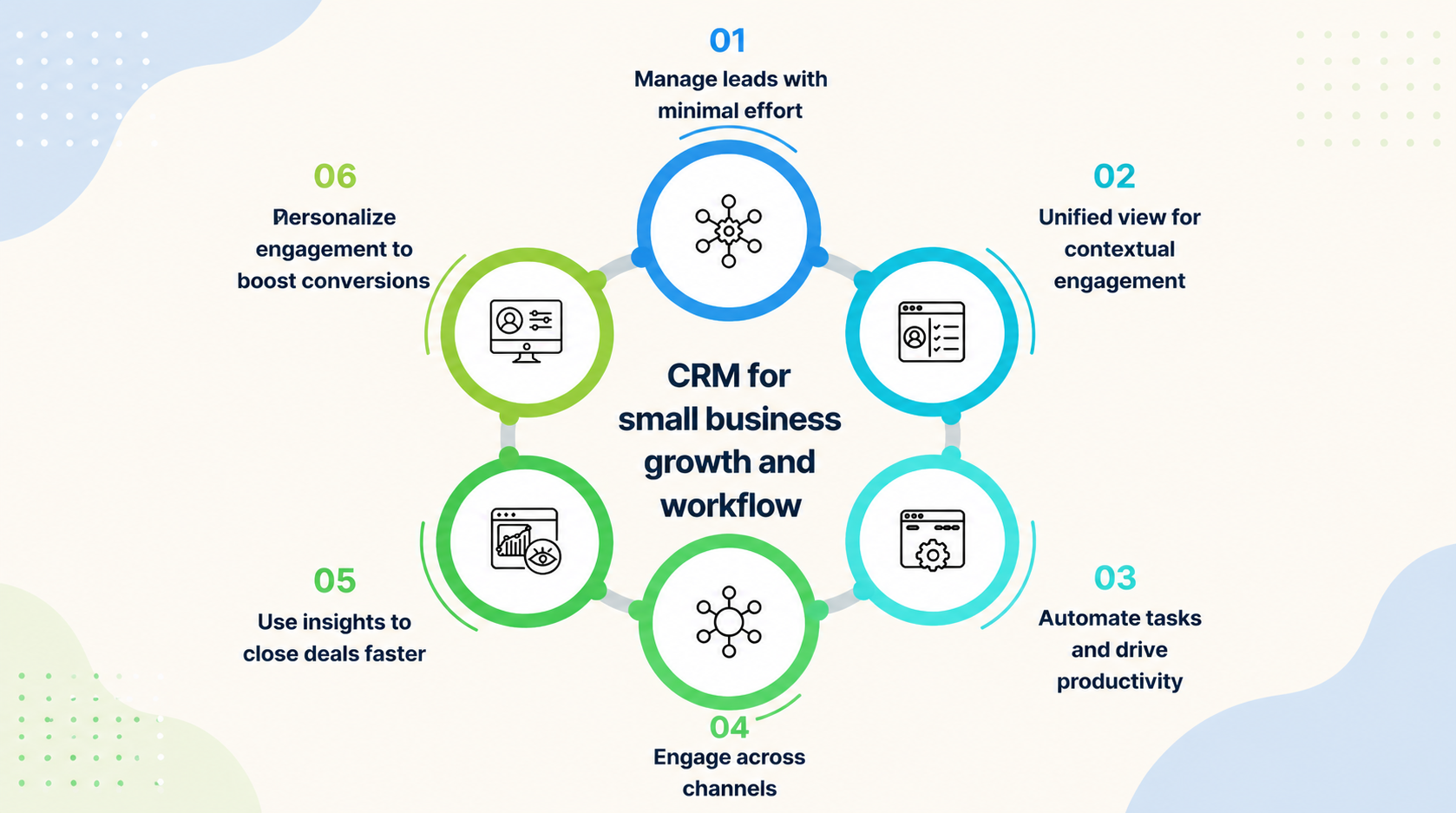
CRM for Small Business Growth | Workflow Automation & Productivity Guide
Running a small business involves managing multiple activities at the same time. From handling enquiries to coordinating with team members and completing sales processes, everything requires proper planning and execution.
When these tasks are managed manually, it often leads to delays and inefficiencies. CRM software helps in organising these activities and improving workflow through automation.
What is Workflow Automation in CRM?
Workflow automation refers to the use of technology to perform repetitive tasks without manual intervention. In a CRM system, this includes actions like assigning leads, sending follow-ups, and updating records automatically.
Instead of relying on manual updates, the system ensures that processes are followed consistently. This reduces errors and saves time for the team.
How CRM Improves Workflow
CRM systems bring structure to daily operations. They define clear processes for handling leads and managing customer interactions.
For example, when a new enquiry is received, the CRM can automatically assign it to a sales representative. It can also schedule follow-up reminders and update the lead status based on actions taken.
This structured approach ensures that nothing is missed and all tasks are completed on time.
Key Benefits for Small Businesses
Implementing CRM for workflow automation provides several advantages that directly impact business performance.
1. Better Time Management
Automation reduces the need for manual work, allowing employees to focus on more important tasks such as closing deals.
2. Improved Team Coordination
When all information is available in one system, team members can collaborate more effectively. There is less confusion and better clarity.
3. Consistency in Processes
Automation ensures that every lead is handled in a similar manner, maintaining quality and consistency.
4. Increased Productivity
With fewer repetitive tasks, teams can handle more work in less time, improving overall efficiency.
Impact on Business Growth
Efficient workflows contribute directly to business growth. When processes are streamlined, businesses can manage more leads and improve conversion rates. CRM also helps in identifying areas where improvements are needed. Reports and analytics provide insights into performance, allowing businesses to make better decisions. Growth becomes more manageable when operations are organized and predictable.
Common Challenges Without Workflow Automation
Businesses that do not use automation often face issues such as:
Conclusion
CRM plays a crucial role in improving workflow and supporting business growth. By automating routine tasks and organising processes, it helps small businesses operate more efficiently. For businesses in India looking to grow steadily, adopting CRM with workflow automation is a practical and effective step. It not only improves daily operations but also creates a strong foundation for future expansion.